

How often should you retwist mature locs? If you have had your locs for several years, you might still wonder about the perfect timeframe.
A mature locs retwist schedule is not the same as the schedule you followed when your coils were new. In fact, many people ask me how long between retwists is safe, and I always tell them to watch for signs you need a retwist instead of counting days.
Because your hair’s needs shift as it matures, over-retwisting mature locs can cause more harm than good. So finding the right retwist frequency for mature locs sets the foundation for healthy, thick locs that last a lifetime.
I have been a loctician for over twelve years, and my own locs are now past my shoulders. Throughout my journey, I learned that the most important thing is not a rigid calendar but a realistic rhythm that respects your hair’s unique temperament.
When I first started my locs, I retwisted them every three weeks without giving it much thought. My roots always looked fresh, but my hair felt weak. Over time, I noticed thinning around my edges and along my parting. I had to completely change my approach, and I want to help you avoid the same mistakes.
Throughout this post, I will share what actually works for mature locs, how to listen to your hair, and how to build a flexible routine you can stick to without sacrificing the health of your crown.
The Difference Between Starter Locs and Mature Locs

A lot of confusion around retwisting comes from treating mature locs like starter locs. When you first start your locs, your hair is not fully locked.
The coils or twists can unravel easily, and new growth makes the style look messy fast. For this reason, starter locs often need a retwist every two to four weeks. However, mature locs are a completely different story.
By the time your locs have fully formed, the strands have tangled and sealed into a solid mass. They no longer unravel at the ends, and they hold their shape with minimal coaxing.
Your roots still grow, but the locked shaft holds its structure.
Because of this shift, the same weekly or biweekly routine that worked in the beginning can actually weaken mature locs. Mature locs carry the weight of longer, thicker hair, and the root is the most delicate point.
Constantly manipulating that root can lead to breakage, thinning, or even traction alopecia over time. Therefore, the way you care for mature locs has to evolve with them.
In my chair, I have seen countless clients who thought they needed a fresh retwist every few weeks, when their locs were quietly asking for more space. Understanding this fundamental difference is the first step to building a schedule that truly works.
Why Over-Retwisting Can Damage Your Locs
In my early years, I believed that a crisp retwist was the gold standard of loc care. I would retwist my clients’ hair until every parting was sharp and every root was flat.
Eventually, I saw the fallout, literally. One of my longtime clients, Toyin, had beautiful waist length locs but kept asking for retwists every three weeks. After about eight months, she noticed her front locs were thinning at the base.
We traced it back to over manipulation. Her roots never got a real break. Moreover, the constant twisting had stretched and weakened the follicles.
Over-retwisting mature locs does several things you cannot see right away. It places continuous tension on the follicle, which can lead to soreness and small bumps around the hairline.
It compresses the new growth so tightly that the root area becomes fragile. In some cases, the twisting motion can inadvertently snap strands that have not fully anchored into the loc.
This is why you might find short broken hairs in your sink after a retwist. In addition, retwisting too often trains your hair to rely on the twist for neatness, which makes you feel like you need another one sooner. It creates a cycle that is hard to break.
So, before you set another appointment, ask yourself if your scalp truly needs the manipulation or if you just miss the fresh look. Usually, a little softness at the root is a sign of healthy growth, not a problem that needs fixing.
What Is the Ideal Retwist Frequency for Mature Locs?
There is no universal number, but I can give you a realistic range. For most people with mature locs, waiting six to eight weeks between retwists strikes a lovely balance.
This gives your roots enough time to grow out about an inch to an inch and a half, which is the sweet spot for a secure but not overly tight twist.
However, some hair textures and lifestyles allow for even longer breaks. I have clients with coarse, tightly coiled 4C hair who easily stretch their retwist schedule to ten or even twelve weeks.
Their hair holds the twist so well that the locs stay neat for a very long time. On the other hand, those with finer or looser curl patterns might lean closer to the five to six week mark because their new growth does not grip the retwist as firmly.
Lifestyle also plays a big part. For example, if you swim regularly or sweat heavily through daily workouts, your roots might fluff up faster, and you may feel the need for a retwist a little sooner.
In those cases, six weeks is often a comfortable interval. Additionally, the thickness of your locs matters. Micro locs and sisterlocks sometimes require more frequent maintenance because a little new growth can change the parting dramatically.
Conversely, thicker traditional locs can hide new growth easily, so you can wait longer without worrying about a messy appearance. What I always tell my clients is to start with the eight week mark and then adjust gradually. You will be surprised by how much your mature locs appreciate the extra breathing room.
Signs Your Mature Locs Are Ready for a Retwist
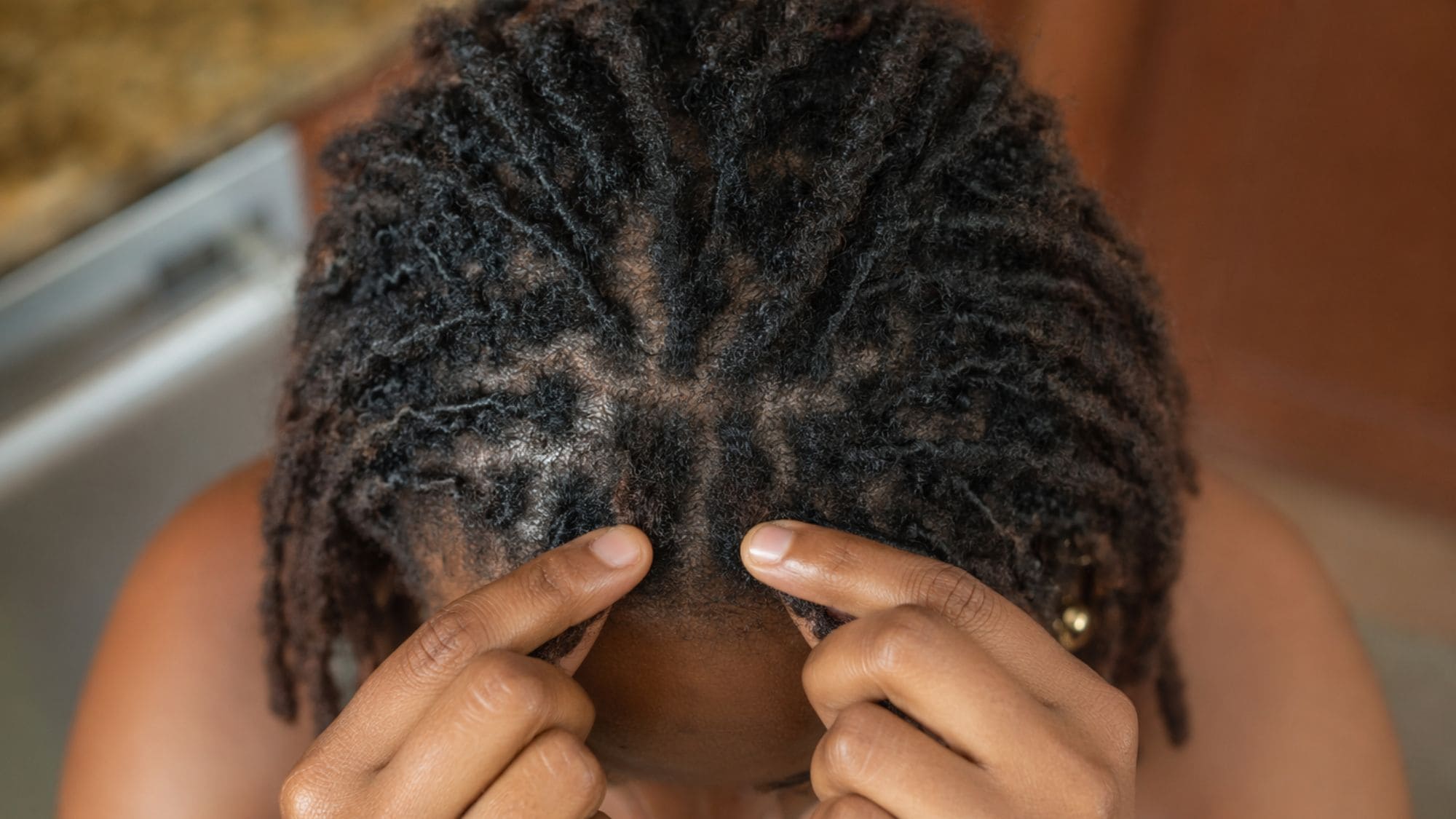
Instead of chasing a date on your phone, learn to read the signs your locs are ready. The clearest signal is the amount of new growth. When the loose, un-loced hair at your root reaches about an inch or more, a retwist will hold well and look clean.
If you retwist with less than half an inch of new growth, the twist has very little to grab onto, and it can slip or put unnecessary stress on the short hairs. So, patience truly pays.
Another sign is that your parts start to lose their definition. With mature locs, the scalp should show clear lines or separations even when the roots have fluffed up a bit.
When those parts begin to disappear under the new growth and neighbouring locs start to tangle at the base, a retwist can restore order. You might also notice little itchy spots or buildup around the roots.
While some itchiness is normal, a constant urge to scratch combined with fuzzy roots can indicate that your hair is ready for a gentle palm roll or interlock session.
More importantly, check for locs that are trying to marry each other. When two locs start to grow together at the root, separating them during a retwist prevents painful and damaging splits later.
In my practice, I ask clients to gently pull two neighbouring locs apart once a week. If they resist and pull at the scalp, it is definitely time for a tidy up.
A Realistic Retwist Schedule That Works with Your Life

Life does not always line up with a perfect eight week calendar, and that is okay. A realistic mature locs retwist schedule bends around your time, energy, and priorities.
I like to help my clients build a seasonal rhythm instead of a strict routine. For instance, many people prefer to retwist right before a big event, a holiday, or a birthday month so they can enjoy that fresh look when they want to feel their best.
After that, they give their hair a longer rest period. This flexible approach works beautifully as long as you are not stretching so far that your roots begin to lock onto each other in a chaotic way.
If you are someone who loves a neat look at all times, try a gentle six week retwist using a light oil and water only.
Skip the heavy gels and pomades that cause buildup and make your retwists clingier. The lighter your technique, the less stress you put on the follicle, even if you retwist a bit more often.
For those who are comfortable with a fuller root, I recommend exploring the eight to ten week range. This longer time frame gives your scalp a genuine break.
In between, you can spritz your roots with rose water, gently separate any stuck locs, and wrap your hair at night. These small habits preserve your style and make the stretching period feel manageable.
I have also seen clients alternate between a full retwist and a simple wash and separate appointment. Doing a thorough cleanse at the midway point refreshes the scalp without manipulating the root, which keeps things healthy and clean.
Caring for Your Locs Between Retwists

The way you treat your locs between retwists makes all the difference. First, keep your scalp moisturised but not soggy.
I recommend a light mist of water mixed with a few drops of jojoba or argan oil every two to three days. Focus on your roots and avoid soaking the length.
Importantly, do not over oil your scalp. A tiny amount goes a long way, and too much product sits at the base of your locs, attracting lint and creating buildup that later feels like a chore to wash out.
Next, nighttime protection is not negotiable. A satin or silk scarf or bonnet preserves the shape of your retwist and keeps your roots from drying out against cotton pillows.
If you are a restless sleeper, a satin pillowcase offers a slip that reduces friction and fuzz. In addition, during the day, try not to constantly twist your locs with your fingers.
This anxious habit stretches the root and can lead to thinning over time. Instead, when you feel the urge to neaten things up, simply palm roll a few locs with a little water on your hands.
Washing your hair is another key piece. You can absolutely wash your mature locs between retwists, as long as you do it gently. I often suggest a diluted shampoo in a spray bottle that you can apply directly to the scalp.
Massage with your fingertips, not your nails. Then let the water run through your locs without rough scrubbing. Some people choose to wash only when they are ready for a retwist because the water makes the new growth puff up.
Yet a clean scalp promotes growth and prevents itching, so find the balance that keeps you comfortable. After washing, you can lightly braid or band your locs at the roots to stretch the new growth as it dries. This small step helps you extend the neat look by several days.
What Happens If You Wait Too Long Between Retwists?
I often hear the question, “Can I damage my locs by waiting too long?” The answer is yes, but it is much less common than damage from over twisting.
Waiting too long between retwists mainly affects the roots. When new growth accumulates past two inches, the loose hair can start wrapping around the base of neighbouring locs.
Over time, this creates a web of tangled roots that can be painful to separate. In extreme cases, two or more locs can permanently marry, and the only way to fix it is to cut them apart, which leaves weakened, uneven bases.
Additionally, extremely stretched retwist intervals can lead to matting at the root that traps sweat, oil, and dead skin cells. This creates a breeding ground for itchiness and dandruff.
For people with thinner locs, the weight of an unretwisted root can also cause pulling on the follicle, especially along the edges. So, while the rare ten to twelve week gap is fine for some hair types, regularly stretching beyond that without any maintenance is risky.
I suggest doing a check in every few weeks. If your roots start to web aggressively or your scalp feels constantly sore, it is better to do a gentle retwist or at least separate the roots than to wait for a crisis.
How to Make Your Retwist Last Longer
One of my favourite conversations with clients is teaching them how to stretch their retwist without losing that fresh feeling. It always starts with the product.
Heavy waxes and gels give a temporary sleek finish, but they trap moisture and cause buildup, which makes the retwist look old faster.
Instead, use an aloe vera based gel or simply water and a lightweight oil. These natural options keep your roots soft without creating a stiff cast that cracks and fuzzes up quickly.
Another effective trick is to avoid wetting your roots for at least the first five to seven days after a retwist.
This gives the twist time to set. If you need to refresh your style, sit in a steamy bathroom instead of directly wetting your hair. Steam loosens the new growth gently and reactivates any light product you applied.
In addition, try low manipulation styles like a loose pineapple at night or a headwrap during the day to keep your locs from rubbing against your clothes or backpack straps. Some of my clients swear by silk lined beanies during colder months.
These simple choices preserve your parting, reduce halo fuzz, and let you walk into week six looking intentionally neat, not messy. Above all, stay consistent with your root separation habit.
Every few days, part a finger through your locs and gently pull them apart. Do this without twisting. It stops the locs from sticking together at the root and delays the need for a full retwist by several weeks. When you do finally sit down for a retwist, the process will be faster and far less painful because the roots are not fighting you.
Special Considerations for Different Loc Sizes and Textures
I must mention that not all mature locs behave the same. Sisterlocks and microlocs are a whole world of their own. Because the locs are so small, a small amount of new growth can make the entire style lose definition.
Many sisterlock wearers maintain their hair every four to six weeks, and that is perfectly healthy as long as the consultant uses a gentle interlocking technique without overtightening.
For thicker traditional locs, the opposite is true. They can hide new growth for months, and some people happily retwist only four or five times a year. Their locs flourish because the root gets long stretches of freedom.
Hair texture plays a starring role as well. Fine hair tends to show new growth more obviously and may need a retwist a bit sooner to keep the roots from looking empty.
Meanwhile, coarse hair grips the twist so naturally that the style stays anchored for ages. What works for your friend with a different texture might not work for you, and that does not mean anything is wrong.
Take the time to learn how your unique hair responds. When I work with a new client, I always ask them to keep a simple note on their phone. They jot down their retwist date and how their hair feels during each week that follows. This helps us pinpoint the absolute sweet spot for their locs.
Building a Long Term Relationship with Your Locs

Once your locs are fully grown, you can really see all the patience you put in. You made it through the fuzzy stage and the awkward teenage phase.
Now they have their own look and feel. How you take care of them now will decide how they look and feel ten years from now.
I have met sixty year old women with locs so thick and long that they touch the backs of their knees.
When I ask them their secret, they never give me a long, complicated routine. They just say they retwist only when needed, keep their scalp clean, and do not overthink it.
That simple advice has stuck with me, and it is exactly what I tell anyone who sits in my chair.
So here is the real truth about retwisting. Be kind to your roots. Let enough new hair grow in so the twist has something to hold without pulling tight.
And pay attention to what your scalp tells you. Some weeks, your hair might just want a gentle wash instead of a retwist. Other times, your edges might be asking you to wait a few more days. Trust that feeling.
Honestly, the exact number of weeks does not matter as much as the health of your roots. The next time you check your locs, really feel them. If your roots feel strong, your parts are still clear but not sore, and your scalp feels good, then you are doing fine.
Keep listening, keep learning, and give your mature locs the space they have earned. Stick with this gentle, realistic rhythm. You will have thick, healthy locs that look beautiful at every stage, even on the days when they are not freshly retwisted.