


Freeform locs are one of the most beautiful and low effort ways to let your natural hair do its own thing.
But if you have been searching for a real guide on how to start, what to expect, and whether you are doing it right, you have probably noticed something strange. Almost nothing exists for beginners.
The online loc world is mostly about retwisting, loctician visits, and keeping things neat and uniform. That leaves anyone curious about freeform locs, neglect method locs, or even freeform dreads feeling lost.
Worse, it can make you feel like you are being lazy or doing something wrong when you are not. This guide is here to fix that. I will walk you through how to start freeform locs, what each stage honestly looks like, what minimal care actually means, and what you can expect over your first year.
This is for anyone thinking about freeform locs, anyone who has already started and needs some reassurance, and anyone switching from traditional locs to the freeform path.
What Are Freeform Locs, Really?

Let me give you a simple definition first. Freeform locs are locs that form and grow without regular manipulation or retwisting. That is the core of it. But there is a lot of confusion around this topic, so let me clear some things up.
When people say freeform locs have no maintenance, that does not mean zero care. It means no retwisting, no palm rolling, and no mechanical shaping.
You are not forcing your hair into a specific look. You are letting it become what it wants to become. And there is a big difference between freeform and neglect.
Neglect usually means you just stop combing your hair and forget about it. That can lead to accidental matting. Freeform is an intentional choice. You are actively deciding to let your hair loc on its own terms. Those are not the same thing, and you deserve to know that.
Here is something else people do not say enough. There is a whole spectrum within freeform. Some people wash regularly and use light oils.
Others do almost nothing beyond separating their roots. There is no single correct version of freeform. You get to decide what works for your hair and your life.
And yes, I need to address the biggest myth out there. Freeform locs are not dirty, unkempt, or unprofessional. That is just bias dressed up as opinion. Healthy, intentional freeform locs look like art.
They have texture, movement, and personality. They are not for everyone, and that is fine. But they are not less than traditional locs just because they look different.
Freeform Locs vs Traditional Locs: What Is Actually Different

If you are trying to decide between freeform and traditional locs, you need the real differences, not a sales pitch for one side. So let me break this down honestly.
Time and cost are the first big difference. Traditional locs need retwist appointments every four to eight weeks. Those visits add up. Over a year, you could easily spend several hundred dollars or more. Freeform removes that entirely. No appointments. No retwist costs. The time and money you save is real, and it is worth naming directly.
Appearance is another major difference. Traditional locs tend to be very uniform in size and shape because someone is actively maintaining them. Freeform locs are the opposite.
They vary in thickness. Some may naturally merge at the base. Each one looks slightly different from the others. That variation is not a flaw. It is the whole aesthetic.
Growth and health matter too. Freeform locs often have less traction alopecia and root thinning because there is no repeated tension from retwisting. If you have fine or fragile hair, this is a meaningful benefit. Your roots get a break from constant pulling.
Control is where the two paths really split. With traditional locs, you have more say over the final size and shape. With freeform, your hair largely decides for itself. Some people love the surrender in that. They find it freeing. Others find it uncomfortable. Both reactions are completely valid.
I also want to be honest about the social reality. Freeform locs are still sometimes treated differently in professional environments. That is not fair, but it is true. The CROWN Act has helped in many states, but bias still exists. I am not saying this to discourage you. I am saying it so you can go in with your eyes open and make the choice that is right for your life.
How to Start Freeform Locs – Three Ways to Begin
Getting started with freeform locs is simpler than most people think. But there are a few different paths, and the right one depends on your hair and your personality. Here are your three real options.
How to Start Freeform Locs – Three Ways to Begin
Option 1: Start From Scratch (The True Neglect Method)

This is the most hands off approach. You simply stop combing or brushing your hair and allow it to mat and loc on its own over time. This works best for people with type 4 hair, so 4a, 4b, or 4c, who want the most organic result possible.
Here is what you need to know upfront. Your hair will go through a messy, undefined phase before coils and sections begin to form naturally. This can feel alarming if you are not prepared for it. You might look in the mirror and wonder what you have done. That is normal.
The honest timeline for true neglect locs is six to eighteen months to fully lock. It depends entirely on your hair type and texture. One practical note for you. Even with the neglect method, you should separate any sections that merge at the scalp during the first few months. This prevents one large unintended mass from forming. That is not manipulation. It is just maintenance of what you actually want.
Option 2: Start With Two Strand Twists or Coils, Then Leave Them

This is the most common freeform starting method for good reason. You create an initial section pattern using twists or coils. Then you put down the comb and let them loc from that base.
This works best for people who want some initial control over the size and placement of their locs before going freeform. It is also great for people with looser curl patterns, like 3c or 4a, who find that full neglect takes too long to start visibly locking.
The advantage here is clear. You get a head start on the loc formation process, and your sections are more defined early on. Once you stop retwisting, the roots grow out freely, and the locs begin to take on their own shape from that point forward.
Option 3: Transition From Traditional Locs to Freeform
This option is more common than people realise. Many people start with traditional maintained locs and gradually stop retwisting as their locs mature. So if you already have traditional locs and you want to let them go freeform from here, you are not alone.
Here is what happens when you make the switch. The roots grow out freely. The new growth looks looser and less defined than the locked portion below. Over time, the entire loc takes on a more organic look.
I want to be honest with you about one thing. The transition period where the roots are clearly untwisted but the rest of the loc is still neat can feel awkward. You might feel like your hair looks unfinished or messy. That is normal. It passes. Just give it time.
Freeform Locs Stages: A Realistic Timeline of What to Expect
This is the section I wish someone had given me when I started. Nobody else has written this specifically for freeform locs, so pay attention here. I am going to tell you exactly what to expect, including what feels bad alongside what gets better.
Stage 1: The Starter Phase (Months 0 to 3)
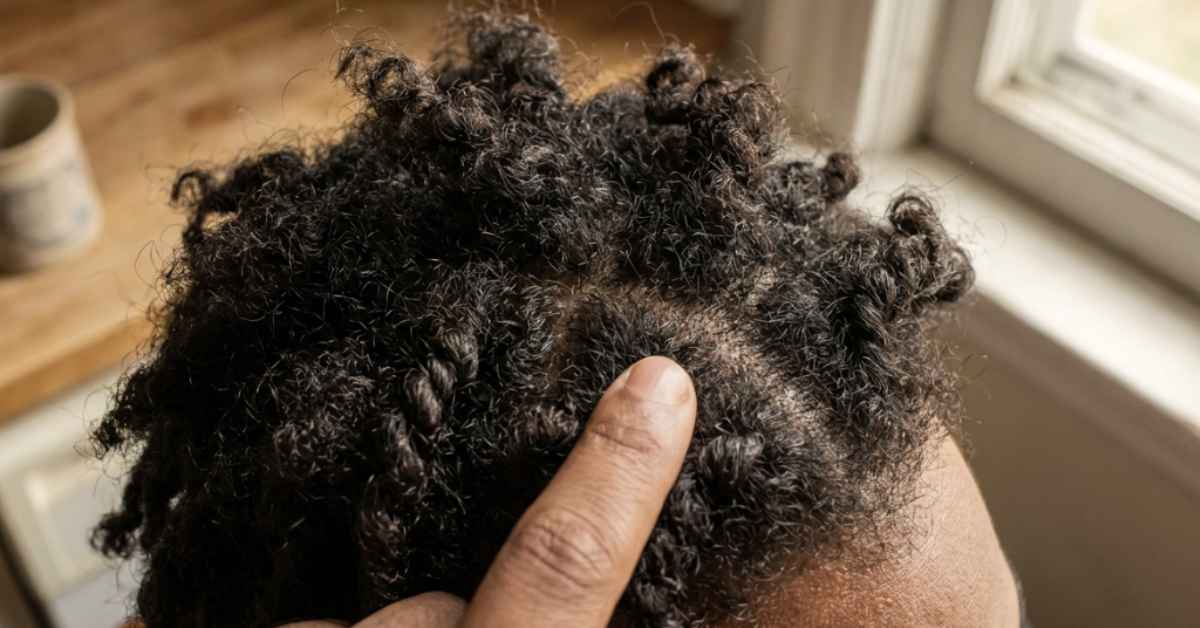
Your hair will look like coils, twists, or loose sections depending on your starting method. There will be lots of frizz. The hair does not look like locs yet. This is normal and expected.
What people feel at this stage is almost always the same. You will second guess your decision. You will wonder if something is wrong. You will compare your hair to people who are further along. Name that feeling. It is real. And it is okay.
What do you actually do at this stage? Very little. Separate sections that are trying to merge at the base if you do not want them to combine. Wash gently. Leave everything else alone. The most common mistake here is over touching, re twisting out of anxiety, or giving up too early because the hair looks undefined.
Stage 2: The Budding Phase (Months 3 to 6)

Now things start to get interesting. The ends of your locs will start to close and feel slightly spongy. Small buds or knots will form at the tips. The mid shaft may still look loose, but the ends are beginning to lock. This is the first real visual sign of progress.
How will you feel? Cautious optimism mixed with frustration that the roots are still so undefined. That is completely normal. Keep doing what you are doing. Continue washing. Separate at the roots where needed. Resist any urge to retwist.
One thing to watch for here. If your locs are budding but also feel very dry, this is the time to introduce a very light oil to the scalp. Heavy products will cause buildup, so keep it light.
Stage 3: The Teen Phase (Months 6 to 12)

This is the hardest stage aesthetically for most people. Your locs are forming more clearly but are still inconsistent. Some locs look more locked than others. The hair may look frizzy, slightly puffed out, or uneven.
Why is this stage so hard? Because your locs are too formed to look like loose natural hair, but not formed enough to look like the locs you imagined. It is the visual in between. And it tests your patience more than any other stage.
What should you do? Stay the course. Styling options like buns, puffs, or headwraps can help during this phase if the appearance is causing you distress. And here is your reassurance. Almost every person with beautiful mature freeform locs looked exactly like this at some point. This stage does not last forever.
Stage 4: Maturing Phase (Months 12 to 24)

You made it. Now your locs are clearly defined. The shape is more settled. Length is becoming noticeable. The loc personality, some thicker, some thinner, some slightly curved, is fully visible now.
What changes in care? Washing becomes easier as the locs are fully locked. Your hair holds moisture better. Products penetrate more evenly. And here is the mental shift that most people report at this stage. This is when freeform starts to feel genuinely yours. The anxiety of the early stages lifts, and your hair feels like an expression of your identity rather than a project.
Stage 5: Mature Freeform Locs (2 Years and Beyond)

This is the reward. Your locs are fully locked, organic in shape, and deeply personal. No two sets of mature freeform locs look the same.
What does care look like at this stage? Washing every one to two weeks. Occasional scalp oiling. And that is largely it. This is the promise of freeform. Minimal care. Maximum result.
One thing people often notice at this stage is that their locs have merged in some places, creating thicker locs than they started with. Some people love this and let it happen. Others separate them. Both choices are fine.
Freeform Locs Care: What You Actually Need to Do

Let me clear something up right now. Freeform does not mean zero care. But the care involved is genuinely minimal. Here is exactly what you need to do.
Washing is non negotiable. Freeform locs should still be washed regularly, about every one to two weeks depending on your scalp and activity level. Use a residue free or clarifying shampoo. Rinse thoroughly. The biggest mistake freeform beginners make is thinking no maintenance means no washing. That leads to buildup and odour. Do not be that person.
Drying matters more with freeform locs than with traditional locs. Why? Because freeform locs are denser and hold water longer. Sitting under a hooded dryer works great. Air drying in the sun is another good option. A microfibre towel works too. But never go to bed with wet locs. That causes mildew and a persistent smell that is very hard to remove.
Your scalp still needs attention too. A lightweight oil applied between your locs every week or two keeps your scalp moisturised. This prevents the flaking and dryness that many people mistake for buildup. Tea tree oil mixed with jojoba is a simple, effective option.
Separation is important, especially in the first six months. Check your roots regularly and gently pull apart any sections that are merging together unintentionally. This does not conflict with freeform philosophy. It just ensures you end up with individual locs rather than one large section.
And here is what you do not need. No retwisting. No palm rolling. No loctician appointments. No edge control. No heavy butters or waxes. This is where the time and money savings are real.
|
How often |
What to do |
|
Every 1 to 2 weeks |
Wash with residue free shampoo and dry fully |
|
Every week |
Light scalp oil between locs |
|
First 6 months only |
Check roots and separate merging sections |
|
Monthly |
Check for buildup and clarify if needed |
What Freeform Locs Look Like on Different Hair Types

Most freeform content shows one hair type. That is not helpful to you. So let me break down what you can expect based on your actual hair.
On type 3c hair, locs form more slowly and tend to be looser in texture, especially early on. Freeform locs on 3c hair often have a softer, more rope like appearance once they are mature. The neglect method alone may take a very long time. Starting with twists gives you a better initial structure.
On type 4a hair, your hair will loc relatively quickly and tends to form tighter, more defined locs. Freeform locs on 4a hair often have beautiful variation in thickness and a tightly coiled texture at the roots even after full locking.
On type 4b hair, locs form quickly and densely. Freeform locs on 4b hair can become quite thick if sections merge. Regular separation in the first few months keeps them more defined. The finished result tends to be full, substantial, and deeply textured.
On type 4c hair, locs form the fastest. The coil pattern is tight, and the hair mats readily. Freeform locs on 4c hair are often the most dramatic in appearance. Thick, organic, and deeply varied in shape. This hair type is the most forgiving for the pure neglect method.
The Questions About Freeform Locs People Are Afraid to Ask
I have been doing this long enough to know what people really want to ask. So let me answer the questions you might be nervous to say out loud.
Are freeform locs unprofessional?
I will answer this directly and honestly. Bias exists in some workplaces. That is a fact. The CROWN Act has made discrimination illegal in many states, but bias can still show up in smaller ways. However, freeform locs that are healthy and cared for are not objectively unprofessional. The perception is a bias, not a fact. If you are worried about a specific workplace, look at what other people with natural hair are doing there. But please do not let fear make you compromise who you are unless you truly have to.
Will my freeform locs smell?
Only if you do not dry them properly after washing. A well washed, fully dried set of freeform locs does not smell. The mildew issue happens when people go to bed with wet locs or put them in styles while still damp. Dry your hair fully, and you will be fine.
Can I start freeform locs with short hair?
Yes. And in some ways, short hair is easier. There is less weight pulling the early locs apart before they lock. On shorter hair, the early stages look more like texture and frizz than locs. But the process is the same. Just give it time.
What if I change my mind?
I am going to be honest with you because you deserve the truth. Early freeform locs, meaning under six months, can often be combed out. It takes significant work and patience, but it is possible. Mature freeform locs cannot be combed out without cutting your hair. That is not a scare tactic. It is just information you should have before you start.
Do freeform locs stop growing?
No. Locs of any kind continue to grow from your scalp. The length becomes more visible as the locs mature and stretch slightly with weight. There is a common misconception that locs lock in length and stop growing. That is not true at all.
Can I colour freeform locs?
Yes, but timing matters a lot. Wait until your locs are at least twelve months old and fully locked before you apply any colour. Earlier than that, and you risk weakening the structure during a very vulnerable formation stage.
Finding Your Freeform Loc Community
You do not have to do this alone. The freeform community online is real, active, and welcoming. There are spaces on Reddit, YouTube, and Instagram where beginners find support without judgment. People share photos, ask questions, and encourage each other through the hard stages.
I also recommend documenting your journey. Take photos every month. Write down how you feel. The process becomes so much more enjoyable when you can look back and see your progress. And those photos will help you push through the harder stages when you feel like nothing is happening.
Remember this. Freeform locs are deeply personal. There is no wrong way to do them as long as your scalp is healthy and you are happy. Your journey does not have to look like anyone else’s.
Your Locs, Your Rules
Here is what I want you to take away from this guide. Freeform locs are a valid, intentional, beautiful choice. They are not a shortcut. They are not a statement of neglect. They take patience in the early stages. They take minimal but real care throughout. And they require a willingness to let your hair do something largely on its own terms.
Wash regularly. Dry completely. Separate your roots when needed. Keep your scalp oiled. And then let time do the rest.
You are not doing anything wrong if your locs look different from the ones you see online. You are not being lazy because you do not retwist. You are just on a different path. And that path leads to locs that look like nobody else’s but yours.
So start when you are ready. Or keep going if you have already begun. Your locs, your rules.
If you found this guide helpful, you might want to read about white buildup on locs and how to remove it. That is a common issue that catches people off guard, and knowing how to handle it early saves a lot of frustration later.